Apple's First Foldable Is Coming In September. It's Late, It's $2,000, And It's Not What You Think.
The iPhone Fold (or iPhone Ultra) lands this fall. The headline is the hinge. The real story is what Apple chose to leave out.
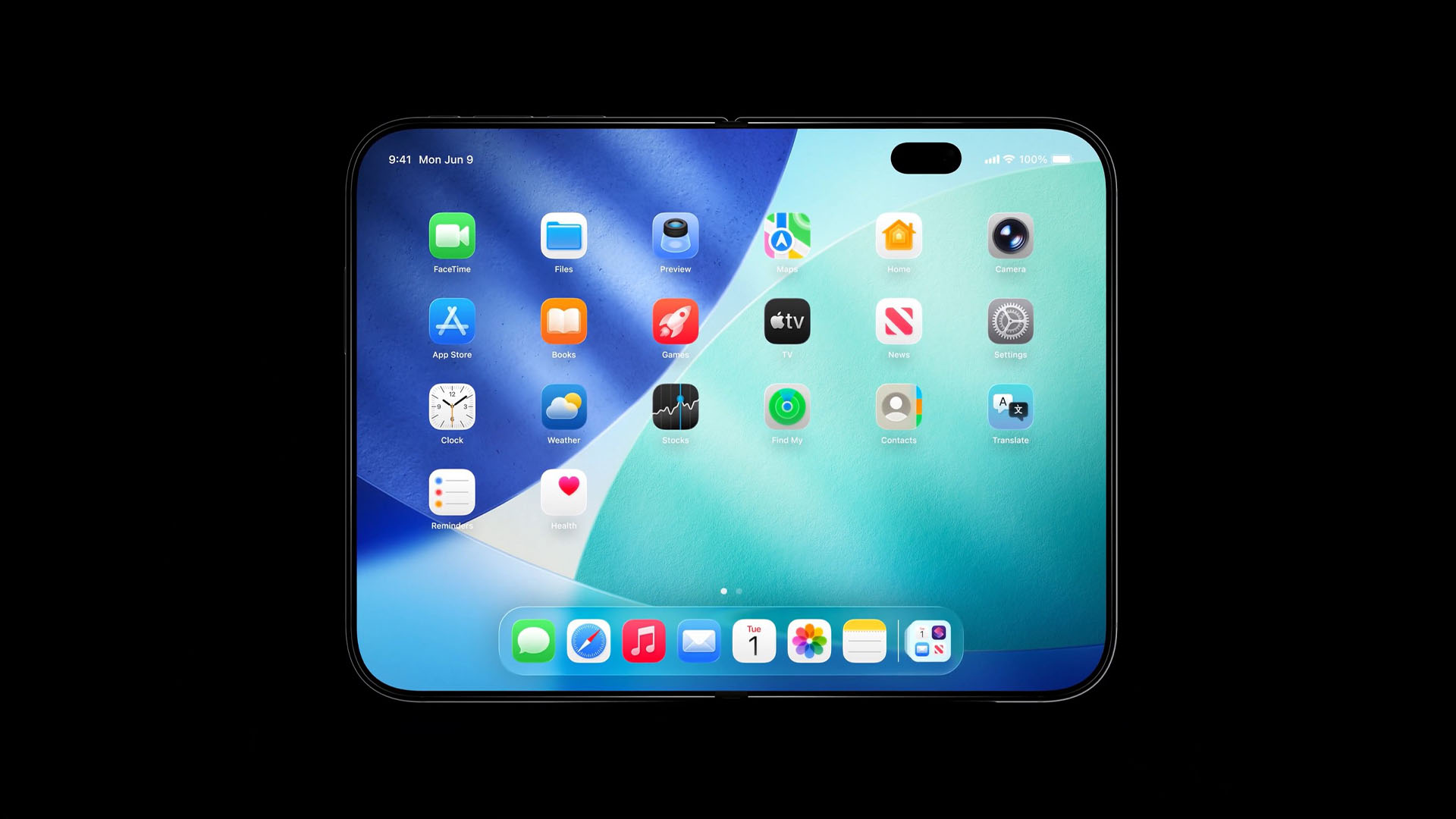
Apple is six years late to the foldable category. That’s not an opinion — Samsung shipped the original Galaxy Fold in 2019. Six years of Samsung, Google, Honor, Huawei, and OPPO refining the form factor. Six years of Apple watching, declining to ship, watching some more.
This September, that ends. The first foldable iPhone — likely branded **iPhone Ultra**, though some leaks still call it **iPhone Fold** — is on track for a fall 2026 launch as part of the iPhone 18 lineup. Production was supposed to start in June. It’s been pushed to August, which is uncomfortably tight for a September reveal, but Apple has been here before.
Here’s what to actually expect, and why the spec sheet isn’t the interesting part.
## The hardware
Two displays. Closed, you get a 5.49-inch outer screen at 2088 x 1422 with a 4:3 aspect ratio — nearly square, narrower than a regular iPhone, more like an early iPhone in proportions. Open it, and the inner display unfolds to 7.76 inches at 2713 x 1920, putting it solidly in mini-tablet territory but slightly smaller than the inner panel of the Samsung Tri Fold I wrote about last month.
It’s a book-style fold. Single hinge, two panels. Apple is not chasing Samsung’s three-panel approach. Whether that’s caution or confidence is the question.
The body is reportedly thinner than expected when closed — Apple is leaning hard on what they’re best at, which is industrial design. Reports also describe a “crease-free” inner display, which would be a category first if it actually holds in real-world use.
## The two surprising omissions
Two specs in this leak deserve more attention than they’re getting.
**Two cameras, no telephoto.** Apple’s Pro iPhones have shipped with three cameras since 2019. The iPhone Ultra ships with two — wide and ultrawide, no dedicated telephoto. For a $2,000+ phone branded “Pro” or “Ultra,” that’s a real choice. The likely reason is internal volume: a folding phone with a hinge has less room for a periscope module, and Apple won’t ship a half-baked telephoto. Better to skip the camera than fake it.
**Touch ID returns.** Face ID requires a True Depth camera array that doesn’t fit cleanly into the inner display of a foldable. Rather than compromise, Apple is reportedly going back to Touch ID — embedded in the side button, similar to the iPad Air. This is the first new iPhone in seven years to ship without Face ID. That’s a story.
These two omissions tell you what Apple is actually doing here: shipping a foldable, but refusing to ship a worse Pro experience to do it. They’d rather drop features than fake them. That’s classic Apple, and it’s why the iPhone Ultra will probably feel more polished than every Samsung Fold to date despite arriving years later.
## The price and what it means
Reports put the starting price north of $2,000. That’s a meaningful jump from the iPhone 17 Pro Max at $1,199 — but it’s almost a thousand dollars *less* than the Samsung Tri Fold. Apple is positioning the iPhone Ultra as expensive but not outlandish. They want this device in the hands of more than just early-adopter tech reviewers.
If you assume Apple sells 5–8 million iPhone Ultras in the first year — a conservative estimate based on Samsung’s first-gen Fold numbers — that’s a $10–16 billion category Apple just walked into. Even by Apple’s standards, that’s a real business.
## What I’m actually watching for
Three things that will decide whether the iPhone Ultra is “iPhone for people who hate foldables” or “the foldable that finally goes mainstream”:
**The crease.** Every foldable has one. If Apple genuinely delivers a crease-free inner display, that single fact will define five years of foldable competition.
**The hinge feel.** Samsung hinges feel mechanical. Pixel hinges feel light. Apple knows how to make hardware feel inevitable. This is where their six-year delay either pays off or doesn’t.
**iPadOS apps on the inner display.** If the unfolded device runs iPadOS-style apps in landscape, with proper multitasking, the iPhone Ultra is genuinely a phone-tablet hybrid. If it just runs upscaled iPhone apps with stretched UI, it’s a $2,000 phone with a bigger screen. The software is the entire experience here.
## My read
Apple isn’t first to foldables, and they don’t have to be. The iPhone is the most successful product in human commercial history, and Apple has a long track record of arriving late and defining the category — see iPad, AirPods, Apple Watch, Apple Silicon. They don’t ship until they’re ready, and “ready” is on their definition, not the market’s.
The iPhone Ultra is the September story. It’s also the first Tim Cook–era flagship that John Ternus inherited mid-development, depending on how the leadership handoff lands. Add that subtext to the launch event and you’ve got the most interesting Apple keynote in years.
Mark September. Whatever Apple shows, the rest of the foldable industry has to respond.